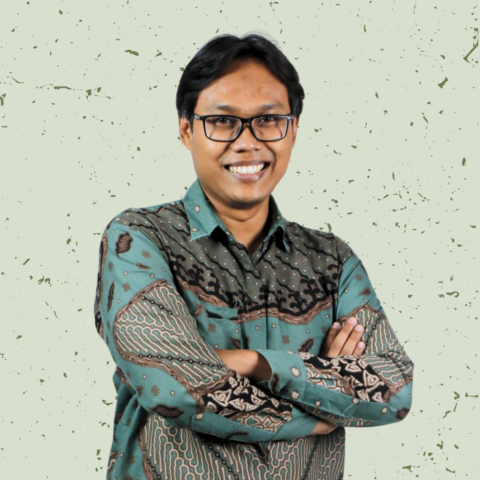
Suwarno, S.Si., M.Pd.
Subject Content Coordinator (SCC)
About Suwarno

Suwarno is an educational technologist and lecturer at the Primary Teacher Education Department, Bina Nusantara University, with a scholarly focus at the intersection of educational technology, mathematics education, and artificial intelligence. His research agenda centers on the design and development of technology-enhanced learning environments, particularly microlearning architectures, hypermedia-based instructional systems, and AI-driven educational platforms, aimed at transforming pedagogical practices in Indonesian primary and higher education contexts. He currently teaches courses in Mathematics for Primary and Foundations of Artificial Intelligence and serves as Subject Content Coordinator for Advanced Research Courses within the department.

Education Background

Suwarno holds a Bachelor of Science in Mathematics from Bogor Agricultural University (IPB), where he developed a rigorous foundation in mathematical sciences, computational methods, and analytical reasoning. He earned his Master of Education in Mathematics Education from Universitas Pendidikan Indonesia (UPI), Bandung, with a specialization in learning media development for mathematics instruction.

Since 2019, he has been pursuing his Doctorate in Educational Technology at Universitas Negeri Jakarta (UNJ), under the supervision of leading scholars in learning design and instructional technology. His doctoral research entitled “Development of Microlearning and Hypermedia Learning Models for Statistics Courses” proposes the TUNES Model (Targeted Microlearning, Unify Hypermedia, Nurture Interactivity, Evaluate Continuously, Self-Reflect & Revise), an original instructional framework that integrates microlearning principles with hypermedia affordances to foster self-regulated and adaptive learning in statistics education. The model is accompanied by EduTunes, a learning management system designed to operationalize the framework in authentic classroom settings.

Academic Work and Research

Suwarno’s scholarly contributions are distinguished by their interdisciplinary breadth and their sustained commitment to bridging theoretical research with practical innovation. His work spans four interconnected domains: (1) educational technology design, encompassing the architecture of AI-powered learning platforms and digital instructional tools; (2) applied machine learning, with applications ranging from healthcare predictive modeling to educational data mining; (3) bibliometric and systematic review research, mapping the intellectual landscapes of emerging fields such as hypermedia learning, serious games, distance learning, differentiated instruction, and technology-enhanced higher education; and (4) mathematics and statistics education, with emphases on problem-solving pedagogy and the integration of computational tools into instructional practice.

A defining feature of his academic profile is his prolific development of original educational technology products, many of which have been formally registered as intellectual property with the Directorate General of Intellectual Property (DJKI), Republic of Indonesia. These include OptimAI, a prompt engineering assistant; PRIMA, a lesson plan generator aligned with Indonesia’s Kurikulum Merdeka; WarnAI, an AI-based virtual education assistant; Skriptum, an AI text humanizer; PRISMA, an adaptive assessment design platform; ANATEXT, a web-based AI-integrated text analysis tool; and FracTic, an interactive fraction learning application. To date, he holds 14 registered intellectual property rights (Hak Cipta), reflecting his sustained commitment to translating scholarly inquiry into tangible educational innovations.

In addition to his individual research pursuits, Suwarno maintains active interdisciplinary collaborations with scholars in computer science, international relations, linguistics, and social studies education. Notable collaborative works include research on digital encryption algorithms, virtual reality-based cultural literacy programs for primary schools, AI-generated poetry analysis, teacher well-being in technology implementation, and geopolitical perception studies. His publication record encompasses peer-reviewed articles in Scopus- and Web of Science-indexed journals—including the Chinese Political Science Review (Springer Nature), the International Journal of Technology, the Journal of Computer Science, and various IEEE and AIP conference proceedings—as well as authored and co-authored books on statistics, digital learning design, and educational research methodology.

Research Interests

  • Educational Technology and Digital Learning Design
  • Microlearning and Hypermedia-Based Instructional Models
  • Artificial Intelligence and Machine Learning in Education
  • Mathematics and Statistics Education
  • Bibliometric Analysis, Systematic Reviews, and Research Mapping
  • Virtual Reality and Immersive Learning Media
  • Differentiated Instruction in Higher Education
  • Teacher Professional Development and Well-Being
The following is a selected list of peer-reviewed journal articles, conference proceedings, and scholarly contributions, presented in reverse chronological order.

  • (2025). Mapping scientific research on differentiated instruction implementation in inclusive education. In 2025 3rd International Conference on Computer System, Information Technology, and Electrical Engineering (COSITE), Banda Aceh, Indonesia (pp. 25–30). IEEE. https://doi.org/10.1109/COSITE68330.2025.11414408
  • (2025). Teacher well-being in implementing the educational technologies: A systematic literature review. In 2025 3rd International Conference on Computer System, Information Technology, and Electrical Engineering (COSITE), Banda Aceh, Indonesia (pp. 19–24). IEEE. https://doi.org/10.1109/COSITE68330.2025.11414402
  • (2025). Exploring the effectiveness of differentiated instruction in university settings: A text and sentiment analysis approach. Cultural Management: Science and Education, 9(1), 9–29.
  • (2025). A comparative analysis of physical and inner structures in human and artificial intelligences generated poetry. In 11th International Conference on Education and Technology (ICET) (pp. 214–219).
  • (2025). Assessing the China threat: Perspectives of university students in Jakarta on the South China Sea dispute and the belt and road initiative. Chinese Political Science Review, 10(1), 123–147.
  • (2025). Sustainable and equitable development through SEZ in Indonesia. IOP Conference Series: Earth and Environmental Science, 1441(1), 012001.
  • (2024). Mapping research trends in technology-enhanced learning in higher education: A bibliometric study. Nanotechnology Perceptions, 20(S14), 2337–2350.
  • (2024). A bibliometric study of 3D printing’s educational applications. Jurnal Vokasi Teknologi Industri (JVTI), 6(1), 012–029.
  • (2024). Pengembangan aplikasi pengenalan budaya Kasepuhan Cirompang berbasis virtual reality untuk pembelajaran IPAS di sekolah dasar. Academy of Education Journal, 15(2), 1622–1633.
  • (2024). Pengembangan buku panduan guru dalam mengoptimalkan artificial intelligence (AI) untuk menunjang pembelajaran. Academy of Education Journal, 15(2), 1615–1621.
  • (2024). Artificial intelligence and Indonesian literary analysis: Analyzing responses to AI-generated Indonesian poetry. In International Conference on Sustainable Energy, Environment, Education, and Information System (ICSEEIS) 2024.
  • (2024). Caring for the environment based on religious values through the utilization of virtual tour. AIP Conference Proceedings, 3026(1), 050003.
  • (2024). Contemporary issues in international relations: The impact of artificial intelligence. CBDS Commentaries, Binus University.
  • (2024). Bridging gaps in learning: Tracing the trends of differentiated instruction in higher education.
  • (2024). Systematic review of differentiated instruction implementation in higher education.
  • (2023). Algorithm for digital image encryption using multiple Hill ciphers, a unimodular matrix, and a logistic map. International Journal of Intelligent Systems and Applications in Engineering, 11(6s), 311–324.
  • (2023). Global trends of distance learning in science education: A bibliometric study. AIP Conference Proceedings, 2751(1), 040006.
  • (2023). On a truss-module. AIP Conference Proceedings, 2733(1), 030001.
  • (2023). Performance comparison of machine learning algorithms for predicting obesity level. AIP Conference Proceedings, 2733(1), 020002.
  • (2023). New algorithm for digital video encryption. Journal of Computer Science, 19(7), 847–860.
  • (2023). Long short-term memory (LSTM): Trends and future research potential. Future, 5, 6.
  • (2022). Library and information science research in Asia region: A bibliometric perspective. Library Philosophy and Practice, 1, 1–20.
  • (2022). Teachers’ performance determinants (quantitative approach to the middle school teacher performance in Salatiga). AIP Conference Proceedings, 2479(1), 020016.
  • (2022). Aspek stilistika dalam kumpulan cerpen karya mahasiswa BIPA dan implementasinya pada pembelajaran BIPA. Berasa: Beranda Sastra, 2(1), 11–22.
  • (2022). Research trends of branding in the context of education: A bibliometric analysis. AL-ISHLAH: Jurnal Pendidikan, 14(4), 5933–5944.
  • (2022). Pengembangan literasi budaya berbasis virtual reality pada pembelajaran IPS di sekolah dasar. Jurnal Inovasi Pendidikan MH Thamrin, 6(1), 1–12.
  • (2021). Mapping scientific research on hypermedia learning technology using Scopus database: A bibliometric approach. Library Philosophy and Practice (e-journal), 5551.
  • (2021). Implementation of Mathematica-assisted learning to improve understanding and problem-solving skills for prospective teachers. Solid State Technology, 64(2), 1143–1150.
  • (2021). Research trends of serious games: Bibliometric analysis. Journal of Physics: Conference Series, 1842(1), 012036.
  • (2021). The influence of school leadership, organizational commitment, and TQM on the performance of public junior high school teachers in Tangerang District. In 6th ISET 2020 (pp. 607–612). Atlantis Press.
  • (2021). Question analysis of mathematics textbook for 2013 curriculum and IB curriculum on quadratic equations. Desimal: Jurnal Matematika, 4(1), 21–28.
  • (2020). Virtual campus tour (student perception of university virtual environment). Journal of Critical Reviews, 7(19), 4964–4969.
  • (2020). Questions analysis in mathematics textbook from competency-based curriculum up to curriculum 2013. Desimal: Jurnal Matematika, 3(2), 89–98.
  • (2019). Education 4.0: Technology integration in calculus course. International Journal of Scientific & Technology Research, 8(8), 1735–1738.
  • (2019). Performance evaluation of artificial neural network classifiers for predicting cesarean sections. International Journal of Scientific & Technology Research, 8(9), 1843–1846.
  • (2019). Development of interactive electronic book based mathematics teaching materials on cube and cuboid in junior high schools. In WoMELA-GG 2019. EAI.
  • (2018). The effect of problem-based spot capturing models on creative and care character of students in elementary school. Journal of Education Research and Evaluation, 2(1).
  • (2017). Mathematica application for graph coloring at the intersection of Jalan Pangeran Antasari Jakarta. AKSIOMA: Jurnal Program Studi Pendidikan Matematika, 6(2), 275–281.
  • (2016). Diagnosis of diabetes using support vector machines with radial basis function kernels. International Journal of Technology, 7(5), 849–858.
  • (2016). Penerapan algoritma Bayesian regularization backpropagation untuk memprediksi penyakit diabetes. Jurnal MIPA, 39(2), 150–158.
  • (2016). Penerapan model tutorial berbantuan Mathematica untuk meningkatkan kemampuan pemecahan masalah matematis. Kalamatika: Jurnal Pendidikan Matematika, 1(1), 47–58.
  • (2016). Audio visual media components in educational game for elementary students. ComTech: Computer, Mathematics and Engineering Applications, 7(4), 255–265.

Books

    Suwarno has authored and co-authored the following academic books and instructional modules, contributing to the scholarly literature in educational technology, statistics, and primary education research methodology.

    • Suwarno, Situmorang, R., & Chaeruman, U. A. (2025). Statistik untuk penelitian pendidikan. PT Mafy Media Literasi Indonesia. ISBN: 9786342581704. 298 pages.
    • Suwarno, Situmorang, R., & Chaeruman, U. A. (2025). Desain pembelajaran digital inovasi model TUNES. Sketsa Media. ISBN: 9786347006882. 231 pages.
    • Adiputra, D. K., Amelia, W., & Suwarno. (2025). Panduan riset PGSD: Melalui studi kasus problematika SD. Bima Utama Press. ISBN: 9786347464972. 193 pages.
    • Asidiqi, D. F., Ginanjar, A., Adiputra, D. K., & Suwarno. (2024). Panduan guru dalam mengoptimalkan artificial intelligence (AI) untuk menunjang pembelajaran. PT Mafy Media Literasi Indonesia. ISBN: 9786238758951. 121 pages.
    • Murnaka, N. P., Sulistiawati, & Suwarno. (2021). Modul pembelajaran peluang berorientasi keterampilan 6C. CV. Pilar Nusantara. ISBN: 9786236455449. 25 pages.

    Intellectual Property Rights (Hak Kekayaan Intelektual)

    The following original works have been registered with the Directorate General of Intellectual Property (DJKI), Ministry of Law and Human Rights, Republic of Indonesia. These registrations reflect Suwarno’s sustained engagement in the development of innovative educational technology products. Total registered works: 14 (SINTA ID: 6025893).

    • PRISMA: Platform Rancang Instan Soal Modern & Adaptif (No. EC002026033377, Hak Cipta, 2026)
    • ANATEXT: Platform Analisis Teks Berbasis Web Terintegrasi Kecerdasan Buatan (No. EC002026033527, Hak Cipta, 2026)
    • Artificial intelligence and Indonesian literary analysis: Analyzing responses to AI-generated Indonesian poetry (No. EC002025140459, Hak Cipta, 2025) — Verified
    • Skriptum: AI Text Humanizer (No. EC002025057448, Hak Cipta, 2025)
    • OptimAI: Prompt Engineering Assistant (No. EC002025229051, Hak Cipta, 2025) — Verified
    • PRIMA: Platform Rancang Instan Modul Ajar (No. EC002025122191, Hak Cipta, 2025)
    • WarnAI: Asisten Virtual Pendidikan Berbasis Kecerdasan Buatan (No. EC002025031106, Hak Cipta, 2025)
    • Interactive Report: Differentiated Instruction Effectiveness Status (No. EC002025193677, Hak Cipta, 2025)
    • FracTic: Fraction and Tech (No. EC002025101555, Hak Cipta, 2025)
    • Buku panduan guru dalam mengoptimalkan artificial intelligence (AI) untuk menunjang pembelajaran (No. EC002024244046, Hak Cipta, 2024)
    • Media pembelajaran kearifan lokal suku Baduy berbasis virtual reality (No. EC002021477482, Hak Cipta, 2021)
    • Modul pembelajaran peluang berorientasi keterampilan 6C (No. EC002021477823, Hak Cipta, 2021)
    • Aplikasi “Primary Teacher Education Department Virtual Tour” (No. EC002019855872, Hak Cipta, 2019)
Suwarno is actively involved in academic service and professional activities that extend beyond his institutional responsibilities at Bina Nusantara University.

Institutional Roles

  • Subject Content Coordinator – Advanced Research Courses, Primary Teacher Education Department, Bina Nusantara University

Editorial and Peer Review Service

  • Reviewer, Frontiers in Pediatrics — Scopus Q2 (Frontiers Media, Switzerland)
  • Reviewer, International Journal of Learning, Teaching and Educational Research — Scopus Q2
  • Reviewer, Jurnal Pendidikan Guru Sekolah Dasar, Universitas Negeri Jakarta
  • Editor & Reviewer, Business Economic, Communication, and Social Sciences Journal (BECOSS) — SINTA 3 Accredited

Technology Development and Innovation

  • Developer of educational technology platforms: OptimAI, PRIMA, WarnAI, Skriptum, PRISMA, ANATEXT, FracTic, and EduTunes LMS — all registered or in the process of registration with DJKI as intellectual property (Hak Cipta)
Best Teaching Award (2021), Bina Nusantara University — awarded in recognition of outstanding instructional quality and student engagement