About Ubaidah
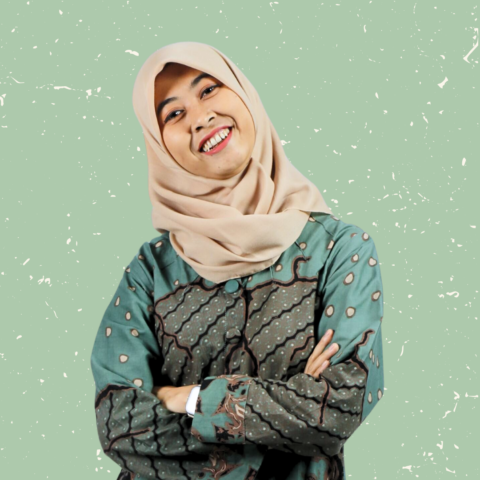
Ubaidah is a Senior Lecturer and Researcher with an academic and professional background in educational technology. Her expertise lies in AI-powered learning design, instructional design, and personalized learning environments.
Her current research was focusing on shaping future learning models by integrating human–AI collaboration into teaching, learning, and assessment practices. She bridges theory and practice by developing innovative educational frameworks, guiding faculty development, and ensuring institutional readiness for emerging learning paradigms. Her work reflects a commitment to transforming education to be more adaptive, data-driven, and learner-centered.
Education Background
Ubaidah holds a doctoral degree in Educational Technology, where her research focused on personalized learning environments and self-regulated learning in higher education. Her academic journey has been centered on understanding how technology—especially artificial intelligence—can enhance learning effectiveness and student engagement.
Her doctoral work contributed to the development of models that integrate self-regulated learning (SRL) with digital and AI-supported environments, particularly in the Indonesian higher education context. Academic Work and Research.
In her role at Binus University, Ubaidah has led and contributed to multiple strategic initiatives aimed at advancing educational innovation. She has been instrumental in developing the Future Learning Model (FLM), which reimagines curriculum structures through flexible pathways, AI-enabled learning, and adaptive evaluation systems.
She is also actively involved in designing and implementing the Human–AI Collaborative Learning Model (HAICOLA), which integrates AI into teaching and learning processes while emphasizing ethical use, metacognitive awareness, and meaningful human–AI interaction.
Her research focuses on how students and educators adopt AI technologies in learning, particularly through the lens of self-regulated learning, psychological factors, and innovation adoption processes. She has conducted both quantitative and qualitative studies, including surveys, experimental designs, and focus group discussions, to understand how AI can enhance academic performance and learning satisfaction.
Beyond research, Ubaidah contributes to faculty development by designing training programs that support lecturers in creating AI-powered instructional materials, assessments, and learning experiences. She also works on institutional systems for monitoring program performance, student engagement, and learning outcomes.
Research Interests
- AI in Education & Human–AI Collaboration
- Self-Regulated Learning (SRL)
- Personalized Learning Systems
- Instructional Design & Educational Technology
- Learning Analytics & Data-Driven Education
- Innovation Adoption in Learning Technologies
 ubaidah@binus.edu
 https://www.linkedin.com/in/ubaidah-sudjai-151684294/